At Arts for Learning Indiana, our team is fueled by passion, purpose, and a shared belief in the transformative power of the arts.
We’re thrilled to share the stories, inspirations, and unique journeys of the passionate individuals who make our art education programs a beacon of hope in the communities we serve.
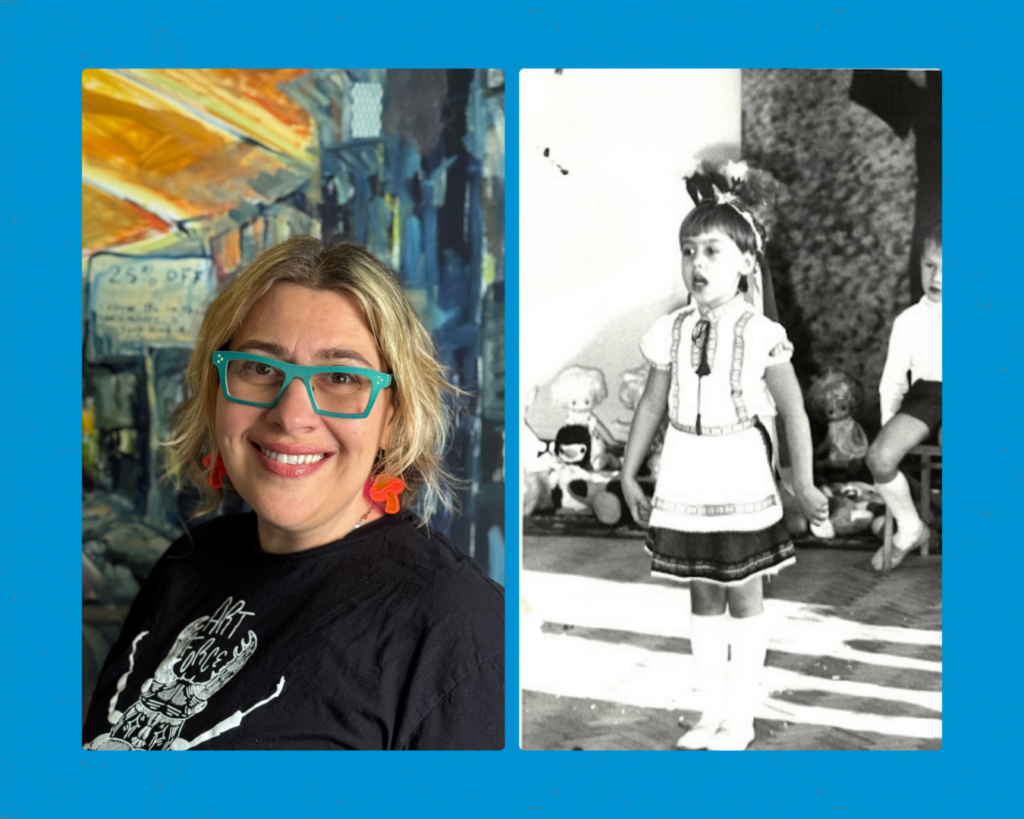
Get to know Arts for Learning Indiana President & CEO, Anya Aslanova, below!
As a kid, what was your go-to way to express yourself creatively—drawing, singing, dancing, storytelling, or something else?
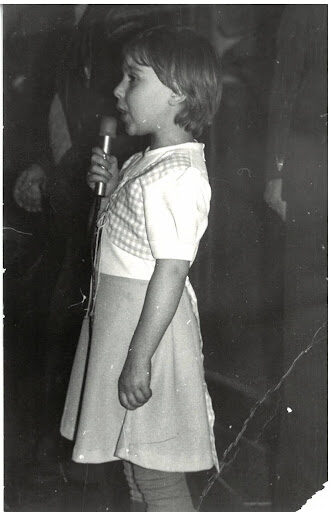
As a kid, I was all about piano, acting, and writing (and performing) poetry. We couldn’t afford a piano at home, but I was absolutely obsessed. I practiced anywhere I could find one. I remember going to work with my mom and, while she was in meetings, I’d sneak off to this hall where there was a piano and play for as long as I could get away with it. It felt magical, like I had discovered this secret world that was just mine. When I was in third grade, my mom signed me up for piano school, and it was a dream come true. And, although that particular dream didn’t flourish into a career or even a casual player, I still remember that magical feeling of excitement and joy.
Poetry came into my life because of my uncle. I was about six years old. He lived in another city, and the only way we could stay in touch back then was through letters. So we started sending each other poems. Every letter had a new poem inside. He would gently edit mine and send them back with suggestions. It made me feel seen and taken seriously. And, at school, we were often assigned to memorize poems, the classics, and recite them in front of the entire class. I loved it.
Acting was also a big part of my childhood. I loved being on stage and, again, that magical feeling of entering a new world, becoming someone else for a little while, putting on the shoes of another person, another personage. And, there’s also something revealing about yourself when you can be incognito while impersonating someone else. I still remember my lines from the Pushkin play we did in second grade.

As an adult, what’s your favorite art medium or creative outlet, and how does it inspire your work at Arts for Learning?
I love this question because it really is just my everyday life.
I’m almost always listening to music. I love catching live music and supporting local musicians, including our talented Teaching Artists, whenever I can. There’s nothing like being in a room where someone is creating in real time. At home, my favorite sounds are my sons practicing cello or messing around on a guitar or another instrument. Hearing them work through a difficult composition, or just let go and let the instrument guide them wherever the sounds take them, is such an important reminder of what creativity really looks like: patience, discipline, freedom, trust in the process, vulnerability, and growth.
I also try to get to art exhibitions when I can, and I make a point not to miss shows by our Teaching Artists. Seeing their work is such a gift and reinforces why our mission matters. I leave inspired every single time.
I still write and sketch when I can, too. I don’t have a ton of time these days, so I’ve learned to appreciate creative practices that are quick and accessible. But even a few minutes of creative practice shifts my perspective, it slows me down, it makes me pay attention, and helps me problem-solve creatively. It connects me to me.
All of it fuels my work at Arts for Learning. Staying connected to my own creative life helps me lead with empathy and authenticity. Art isn’t extra for me; it’s the core of my being, the center of my life. It’s human, it’s vulnerable, and it’s transformative. And that keeps the work real for me.
What’s the most memorable art project or creative experience you’ve ever had—either as a kid or an adult?
This is a hard question because there are so many defining creative moments in my life, moments that taught me something new about a skill, the world around me, or myself. But I’ll share about the first drawings I did in college that ultimately changed the course of my life.
I came to the U.S. at 16 as an exchange student for a year-long high school program and was placed in 12th grade in Springfield, Ohio. Attending an American university had been my dream since I was little. Back in the Soviet Union, it felt completely unreachable — the borders were closed, and leaving the country wasn’t possible. When the Soviet Union collapsed, everything shifted. Dreams slowly started turning into opportunities, and for me, eventually, into reality.
Even though my high school focus at home in Ukraine was mostly humanities, I decided to major in Finance (with a minor in Marketing) in college. My campus jobs? Working at the library at night and modeling for art classes during the day (after all, modeling was the highest-paid job on campus at $6 an hour).
I quickly became friends with a lot of art students because, honestly, they spoke my language. I was drawn to their energy and sense of community, the dialogue, the real connections, the discipline and commitment… and, it was the only department on campus that had unlimited coffee.
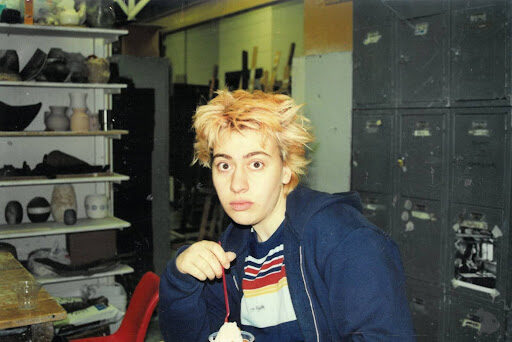
One night during a slow shift at the library, I decided to try sketching. I grabbed a fashion magazine, which felt familiar, since my mom was in the fashion industry, opened to a photograph of two models, and copied it onto drawing paper. It wasn’t awful considering drawing was not my “thing.” I used a 2B pencil and did a lot of smearing.
Completely unaware of what I was doing, I showed it to a sophomore art major who lived on my dorm floor, (who is still a dear friend and now an art professor). She suggested to make an appointment with her art professor “just to see what he says.”
So I did.
That professor, who had a reputation for being a bit of a hardass, studied the drawing for a long time, clearly searching for something encouraging to say. Finally, he said, “You have a good eye for detail.” Apparently, I hadn’t smeared all of them away.
He signed me up for three art classes the following semester. By the end of my freshman year, I had formally switched majors.
We never know what door a messy drawing or a random creative experience might open. Studying art wasn’t a path I had ever considered before. And I truly can’t imagine my life without it now.
Looking back, how do you think your childhood creativity shaped the way you approach your work in arts education now?
I was really fortunate that the arts weren’t treated as “extra” in my childhood; they were part of life and my education, and valued right alongside other disciplines.
I still remember what it meant to me to step into those “worlds.” I keep repeating this word, but, yes, it felt magical. It was magical. But it was also about discipline and working hard for something that was meaningful. Messing up and trying again. Learning how to listen. Learning how to collaborate. Learning how to ask questions and find answers.
The arts taught me how to think differently. In other disciplines, there’s often one right answer. In the arts, there are endless possibilities. Endless solutions. That way of thinking shaped me.
Now, in my work, I lean on those memories all the time. I know personally what it feels like for a child to be given access to creativity, to feel seen, capable, expressive. I also know what it takes behind the scenes: the hard work, the vulnerability, the courage to share something you made.
Those lessons show up in how I lead. They show up in how I advocate for our mission. It all reinforces the same truth for me: the arts don’t just teach skills. The arts shape how we think, how we persist, how we connect.
And that belief is personal.
If you were to compose a soundtrack for our nonprofit, what are three songs you would add to it?
Another great question! I feel like I have to start with a disclaimer, though. Those who know me, know that my taste in music is… not exactly mainstream. I tend to gravitate toward the artistic, slightly experimental, “you either love it or you’re confused by it” kind of music. So this soundtrack might not be everyone’s gym playlist, but, to me, these are not only some of my favorite compositions but they very much feel like us.
Here we go, in no particular order: “Clapping Music” by Steve Reich, “O Superman” by Laurie Anderson, and “Vesna” by DakhaBrakha.
“Clapping Music” is very simple and accessible: just two people clapping. But it only works if they’re truly listening to each other. It’s about focus, relationship, adjustment, and shared responsibility. That feels like social-emotional learning in real time. It also reminds me that you don’t need elaborate supplies or instruments to make powerful art. The process is the art. That’s something we see every day in our classrooms.
“O Superman” is pure interdisciplinary experimentation (which actually hit mainstream airplay on MTV in the 80s). Laurie Anderson is one of my icons who blends voice, technology, storytelling, and performance art that challenges what we define as “music.” That boundary-crossing spirit mirrors our arts-integration work. At Arts for Learning, the arts don’t live in silos — they overlap, connect, and open up new pathways for understanding. Creativity becomes a way of thinking.
And “Vesna” by DakhaBrakha, a Ukrainian band from my hometown, Kyiv, is especially personal to me. They draw from Ukrainian folk traditions and layer in contemporary experimentation. That balance, honoring culture with context and respect, while recognizing it as living and evolving, aligns deeply with our values. Culture isn’t a prop. It’s carried by real artists, real histories, real communities. The song carries that spring energy (the title, Vesna literally means Spring in Ukrainian), and it feels hopeful, expansive, and just beautiful.
Together, these three compositions feel like a reflection of what we stand for: collaboration, thoughtfulness, discipline, creativity, and play.