We recently sat down with Arts for Learning Indiana Teaching Artist, Matt DeLoughery, to hear more about his experience collaborating and exploring with students at Global Prep Academy. Read Matt’s takeaways below:
Tell us a little about the work you’ve been doing with students at Global Prep Academy.
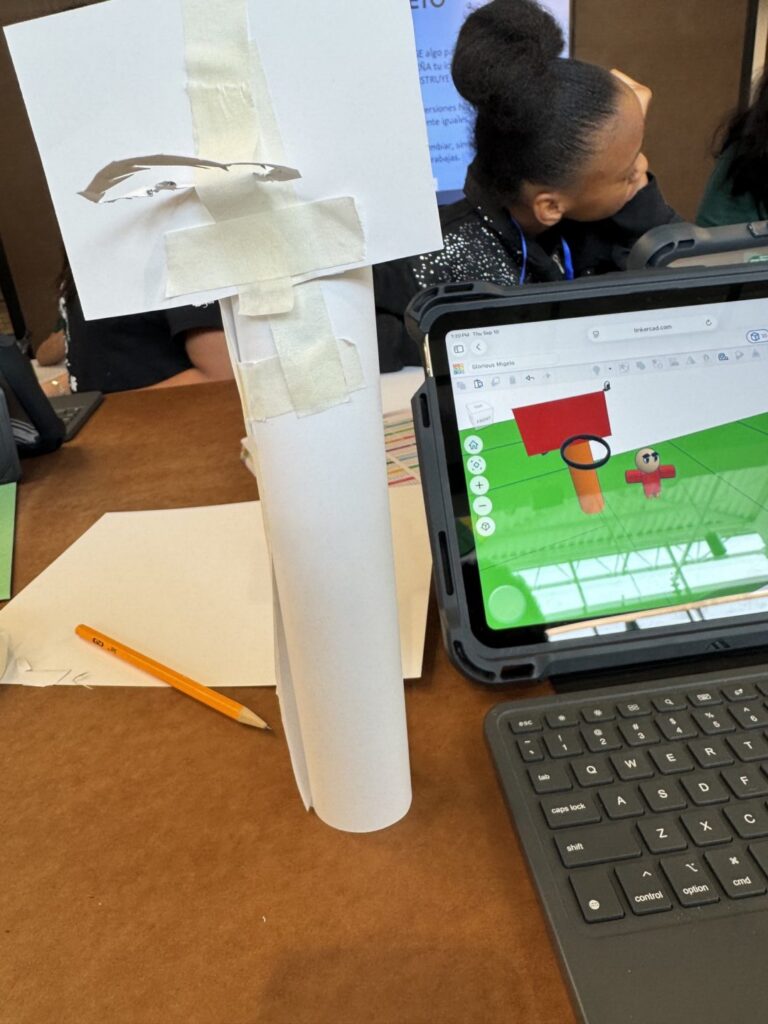
Our program is called Shaped by Us: Emerging Technology Art, and we’ve been exploring three big ideas throughout the semester: Self-Expression, Community, and the Future. We’re looking at how art and emerging technologies can help students express who they are, connect with others, and imagine what they might create in the future. We’ve been learning tools like 3D design and modeling, but we’re also combining those technologies with more traditional artmaking and hands-on prototyping. Students have designed digitally and then translated those ideas into physical objects using materials like paper and cardstock. Each class is also working toward individual projects and collaborative projects that will give students opportunities to apply what they’ve learned in ways that are meaningful to them.
What does a typical session with the students look like?
I try to balance learning new skills with giving students time to experiment and make their own decisions. We might start with a short demonstration or creative challenge and then spend most of the class making. If you walked into the room, you might see students building something in Tinkercad, sketching an idea on paper, cutting and taping together a physical prototype, or helping a classmate figure out how to make something work. There’s usually a lot of conversation and problem-solving happening alongside the artmaking.
What have you enjoyed most about working with the students at Global Prep Academy?
I’ve really enjoyed seeing the students become more comfortable experimenting. Several students were a little shy at first or seemed nervous about using unfamiliar tools creatively. Once they give something a try, though, they tend to really get into it. It has also been exciting to see students help one another. There is a lot of informal collaboration happening, whether someone is showing another student how they solved a problem in Tinkercad or students are sharing ideas about what they could make next.
Is there a particular student moment, interaction, or breakthrough that has stuck with you?
What has stuck with me is seeing the shift that happens when a student who was initially hesitant realizes, “Oh, I can actually do this.” Sometimes a student will be unsure about a tool or say they don’t know what to make, and then after experimenting for a while, they start showing me what they’ve figured out or telling me what they want
to try next. Those moments are meaningful because the goal isn’t just to teach students how to use a particular piece of technology. I want them to see these tools as things they can use to bring their own ideas to life.
How have you seen the students change or grow through the experience?
I’ve seen a lot of growth in their willingness to experiment. Early on, some students needed more direction and reassurance before trying something unfamiliar. As we’ve continued, I’ve seen more students start exploring on their own, helping one another, and thinking ahead about what else they could create. As we introduce different tools and combine traditional media with emerging technologies, I’m also seeing students begin to discover which approaches work best for them. Not every student has to make art in the same way, and I think recognizing
that is an important part of developing their own creative voice.
Have the students surprised you in any way?
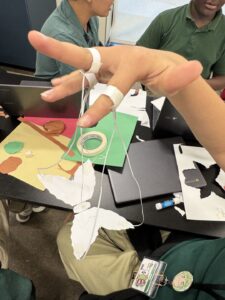
I’m continually surprised by how quickly students start imagining possibilities once they understand what a tool can do. You can teach one technique, and almost immediately a student is asking whether they could use it to make something completely different. I also love seeing the different ways students approach the same challenge. Even when everyone begins with the same instructions, the results can look completely different. That individuality is something I want to encourage rather than having everyone work toward the same “correct” outcome.
What do you think students gain from having opportunities to learn through the arts that they might not get in a traditional classroom setting?
The arts give students an opportunity to make decisions where there isn’t necessarily one correct answer. They can try something, decide it isn’t working, change direction, and discover something they weren’t expecting. That process builds creative problem-solving, but it also gives students ownership. They aren’t only completing an assignment I designed for them. As they develop their individual and group projects, they’re increasingly deciding what they want to communicate, what they want to make, and which tools will help them get there.
How do you approach creating a space where students feel comfortable experimenting, taking creative risks, and expressing themselves?
I try to make experimentation part of the expectation rather than something students can get wrong. Especially when we introduce a new tool, I give them opportunities to play with it before asking them to make something polished. I also try to provide multiple ways into a project. A student might be more comfortable drawing by hand, working digitally, building something physically, or combining all three. As we explore more tools and media, I want students to discover what works for them while also feeling comfortable trying something new.
What has this experience taught or reminded you about being a Teaching Artist?
It has reminded me how important it is to leave room for students to take an idea somewhere I didn’t expect. As a Teaching Artist, I can introduce a tool, technique, or question, but I don’t need to determine exactly what every student creates with it. Some of the most exciting moments happen when students begin making connections themselves. My role becomes less about showing them exactly what to make and more about helping them build the skills and confidence to figure out how to make what they’re imagining.
If you had to describe the impact of this work at Global Prep Academy in one sentence, what would you say?
Shaped by Us gives students the tools, space, and confidence to express themselves, create together, and imagine new possibilities for themselves and their communities.
Intersted in learning more about becoming an Arts for Learning Indiana Teaching Artist? Get started here!